
GINNGER
Active2023 – present
Overview
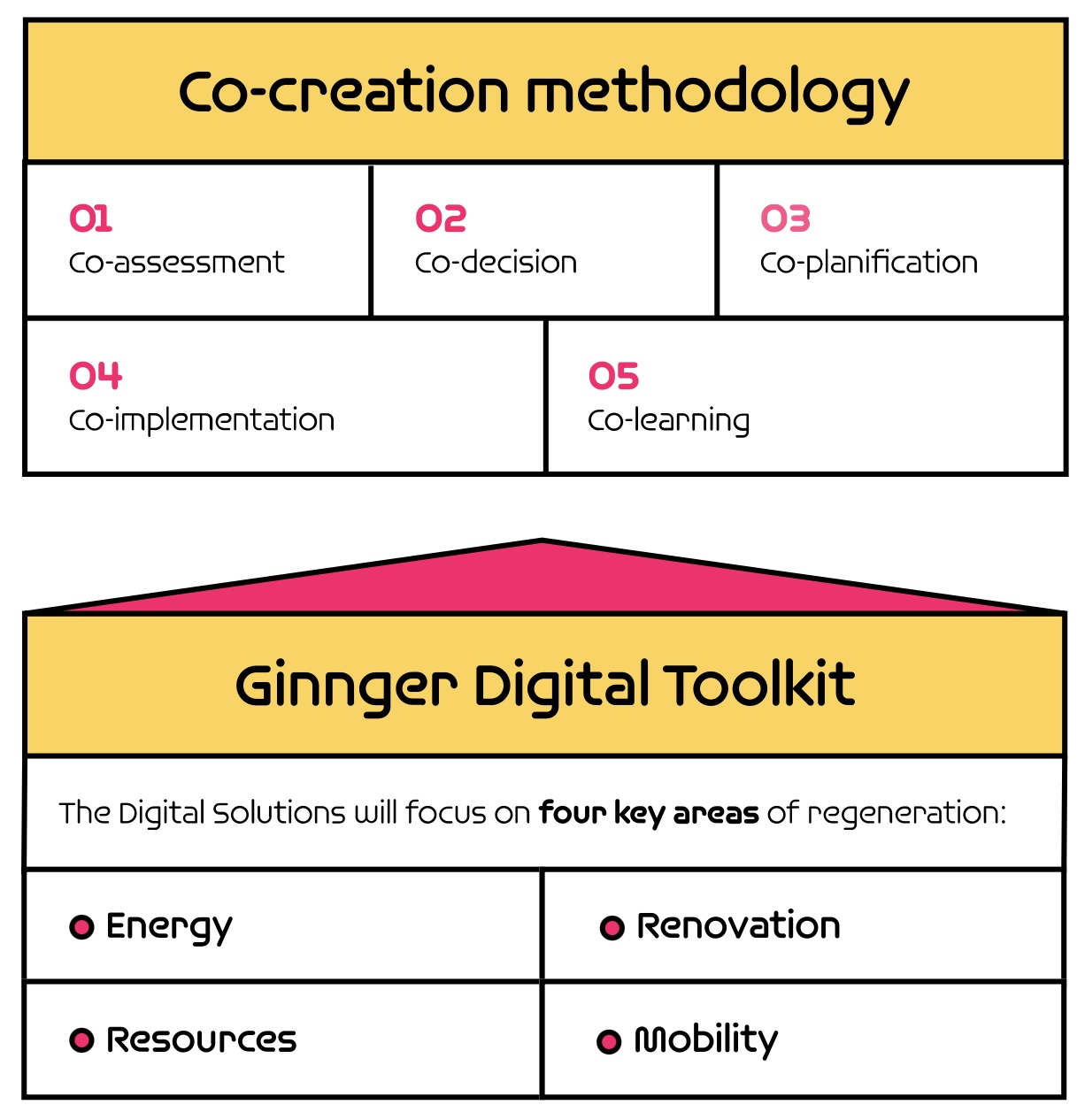
GINNGER is a Horizon Europe Innovation Action focused on the regeneration of European neighbourhoods through co-creation processes involving heterogeneous stakeholder communities. The project combines social-science innovation with a digital toolkit composed of 13 digital solutions spanning Energy, Renovation, Resources, and Mobility, and validates them across six pilot sites in five European countries.
IDeA contributes to the Mobility block through the development of DS13 — E-mobility Optimal Planning Tool, deployed in the Swiss pilot in Massagno. The tool leverages optimisation and data-driven methods to support the planning of EV charging infrastructure by identifying the most suitable locations for new charging stations and the optimal mix of charger technologies.
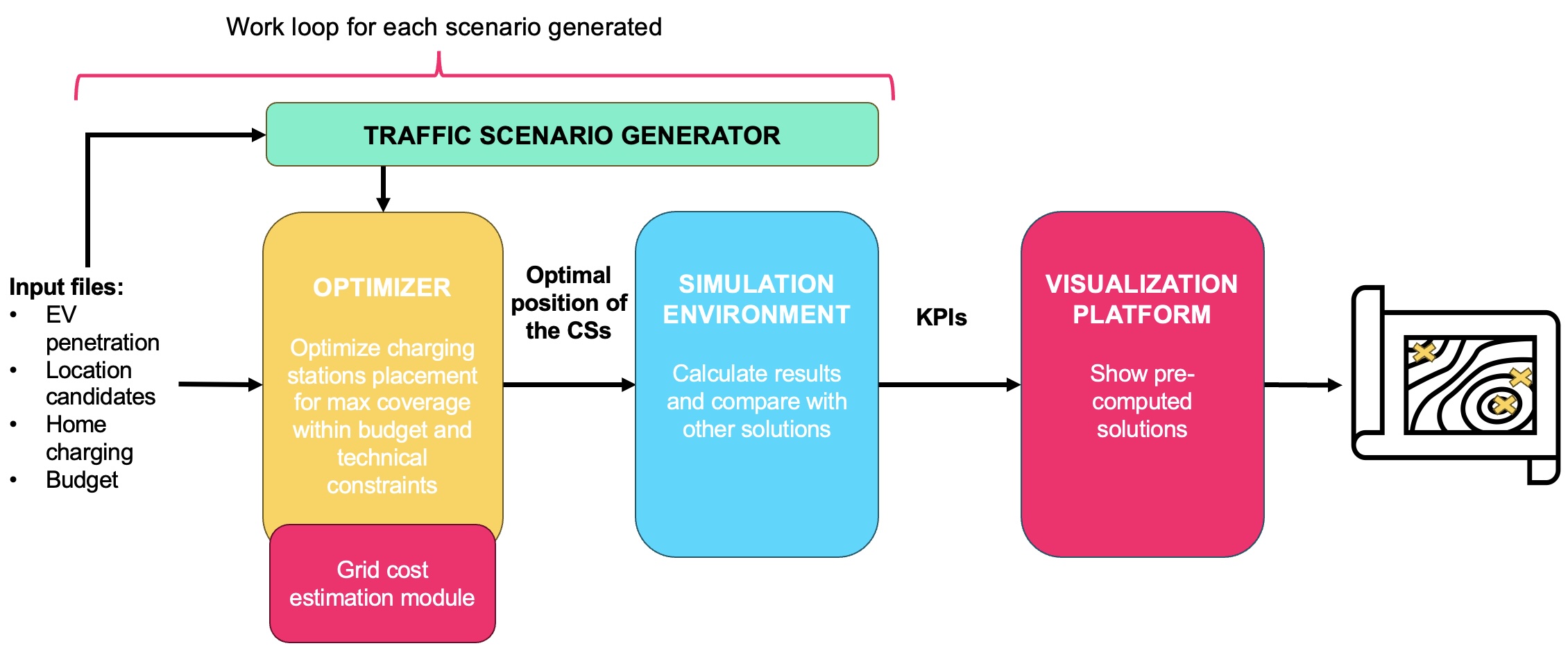
The optimisation engine is formulated as a Mixed-Integer Linear Programming (MILP) model that jointly considers mobility demand, existing charging infrastructure, electrical grid constraints, installation costs, and investment budgets in order to generate cost-effective deployment plans.
Motivation
The rapid diffusion of electric mobility requires cities and districts to carefully plan the expansion of charging infrastructure while balancing economic, technical, and operational constraints. Poorly planned deployments may lead to underutilised stations, excessive infrastructure costs, or insufficient coverage of mobility demand.
In this context, the DS13 planning tool provides decision support capabilities for identifying effective charging infrastructure deployment strategies under realistic operational, financial, and grid-related constraints.